
Understanding Your Fertility Hormones: AMH and FSH Explained
By michelle nix L
Navigating fertility care often begins with understanding key hormones like Anti-Müllerian Hormone (AMH) and Follicle-Stimulating Hormone (FSH). These blood tests offer valuable insights into your ovarian reserve and overall reproductive health, helping to guide your family-building journey.
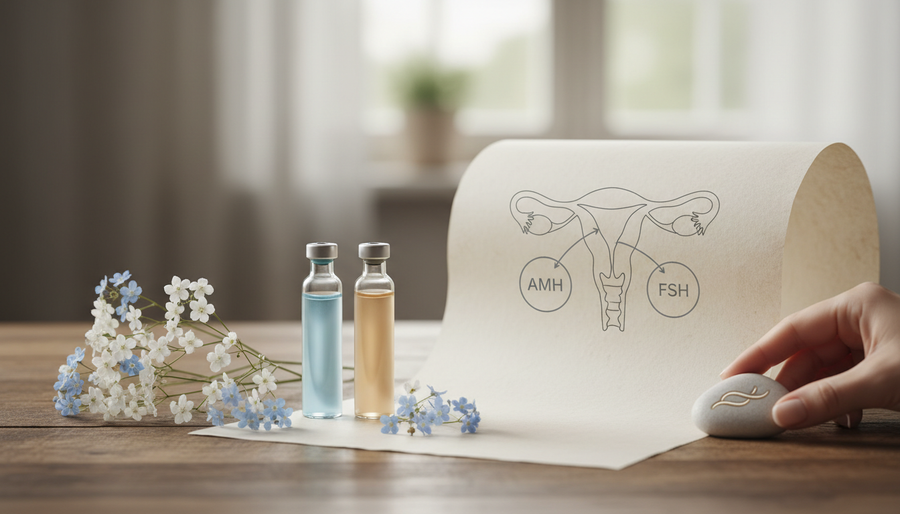
When you're exploring your fertility, understanding certain key hormones can feel like learning a new language. Among the most important are Anti-Müllerian Hormone (AMH) and Follicle-Stimulating Hormone (FSH). These blood tests are often among the first steps in a fertility evaluation, providing crucial insights into your ovarian reserve—the number of eggs you have remaining—and how your reproductive system is functioning.
Think of your hormones as messengers, orchestrating the complex process of ovulation and potential pregnancy. By measuring AMH and FSH, fertility specialists gain a snapshot of your reproductive potential, which helps them tailor a personalized plan for you.
What is AMH (Anti-Müllerian Hormone)?
AMH is a hormone produced by the small, immature follicles within your ovaries, which contain your eggs. It's considered one of the most reliable indicators of your ovarian reserve, essentially estimating your current egg supply. Unlike other hormones that fluctuate throughout your menstrual cycle, AMH levels remain relatively stable, meaning the test can be performed at any time.
What AMH tells you:
- Egg Supply: Higher AMH levels generally suggest a larger egg supply, while lower levels indicate a smaller supply, which naturally declines with age.
- Ovarian Function: It helps doctors understand how your ovaries might respond to fertility medications, particularly during treatments like IVF (in vitro fertilization).
- Other Insights: Very high AMH can sometimes be associated with Polycystic Ovary Syndrome (PCOS), while very low levels might indicate approaching menopause. It's important to remember that AMH doesn't predict your ability to get pregnant naturally, but rather helps plan appropriate fertility treatments if needed.
What is FSH (Follicle-Stimulating Hormone)?
FSH is produced by the pituitary gland in your brain and plays a vital role in stimulating your ovaries to grow and mature follicles each month. These follicles are where eggs develop. FSH levels are typically measured early in your menstrual cycle, usually on day 2, 3, or 4, along with Estradiol.
What FSH tells you:
- Ovarian Response: FSH levels indicate how hard your brain is working to stimulate your ovaries. If your ovarian reserve is diminishing, your brain may produce higher levels of FSH to try and recruit follicles, signaling that your ovaries are working harder.
- Hormone Balance: Measured alongside Estradiol, FSH helps evaluate the communication between your brain and ovaries early in the cycle.
Limitations of FSH: FSH levels can fluctuate from month to month and are an indirect measure of ovarian reserve. This means a single high FSH reading might not tell the whole story, and specialists often look at multiple assessments.
AMH vs. FSH: Key Differences and Why Both Matter
While both AMH and FSH provide insights into your ovarian reserve, there are key differences:
- Stability: AMH levels are stable throughout your cycle, making it a convenient test that can be done anytime. FSH, however, must be measured on a specific day early in your cycle and can vary.
- Directness: AMH directly reflects the number of small follicles, offering a more direct estimate of your egg supply. FSH is an indirect measure, showing how much your brain is stimulating your ovaries.
- Predictive Value: AMH is often considered a better predictor of how your ovaries will respond to fertility treatments, and it can indicate diminished ovarian reserve earlier than FSH.
Today, AMH is often highlighted as a preferred test due to its stability and directness. However, fertility specialists typically consider both AMH and FSH, along with other factors like age, medical history, and ultrasound findings, to get a comprehensive picture of your fertility health. No single test tells the whole story, and interpreting results requires a holistic approach.
How These Tests Guide Your Journey
Understanding your AMH and FSH levels is an empowering step. These results form the foundation for a personalized fertility plan, whether you're considering natural conception, egg freezing, IUI (intrauterine insemination), or IVF. They help your care team:
- Assess Ovarian Reserve: Get a clear idea of your current egg supply.
- Tailor Treatment: Determine the most appropriate medications and protocols for fertility treatments.
- Inform Decisions: Help you make informed choices about your family-building timeline and options.
Beginning fertility testing can feel like a big step, but it's a proactive one that provides valuable information. By working with a fertility specialist, you can translate these numbers into a clear path forward, helping you feel confident and supported in your journey.
Sources
- Fertility Blood Tests Explained: AMH, FSH, and What to Expect
- What FSH, AMH & Progesterone Really Tell You | Aspire Fertility
- AMH or FSH: Which is The Best Test for Ovarian Reserve - Genesis Fertility NY
- Infertility Tests: Checking AMH & FSH Levels
- What's the difference between FSH and AMH? - Proov Test